"Do I really need a generator on my boat?"
It’s one of the most common questions we hear from buyers, and the honest answer has shifted dramatically over the past decade. What was once a near-default piece of equipment — the marine diesel generator — has become, for many of our owners, a piece of kit they’ve happily left off the build list.
That doesn’t mean generators are obsolete. It means the math has changed.
The Old Answer: The Traditional Marine Generator Blueprint
Back when we were building catamarans in Brazil, the conversation usually went like this: how much air conditioning do you want to run at anchor? Then you’d size the generator to match. A 45-foot catamaran might end up carrying a 12kW generator just to keep the air cons humming through the night.
The problem with that approach wasn’t only the weight, though a 12kW generator and its associated fuel, cooling, and exhaust hardware adds real pounds. It was that the generator became the architecture of the boat’s electrical system. Everything else got designed around it. And the running cost — fuel, hours, service intervals, noise, vibration — was something owners absorbed because there wasn’t a better option.
There is now.
What Actually Changed: How Marine Lithium Batteries & Solar Shifted the Math
Three things shifted, and they shifted together.
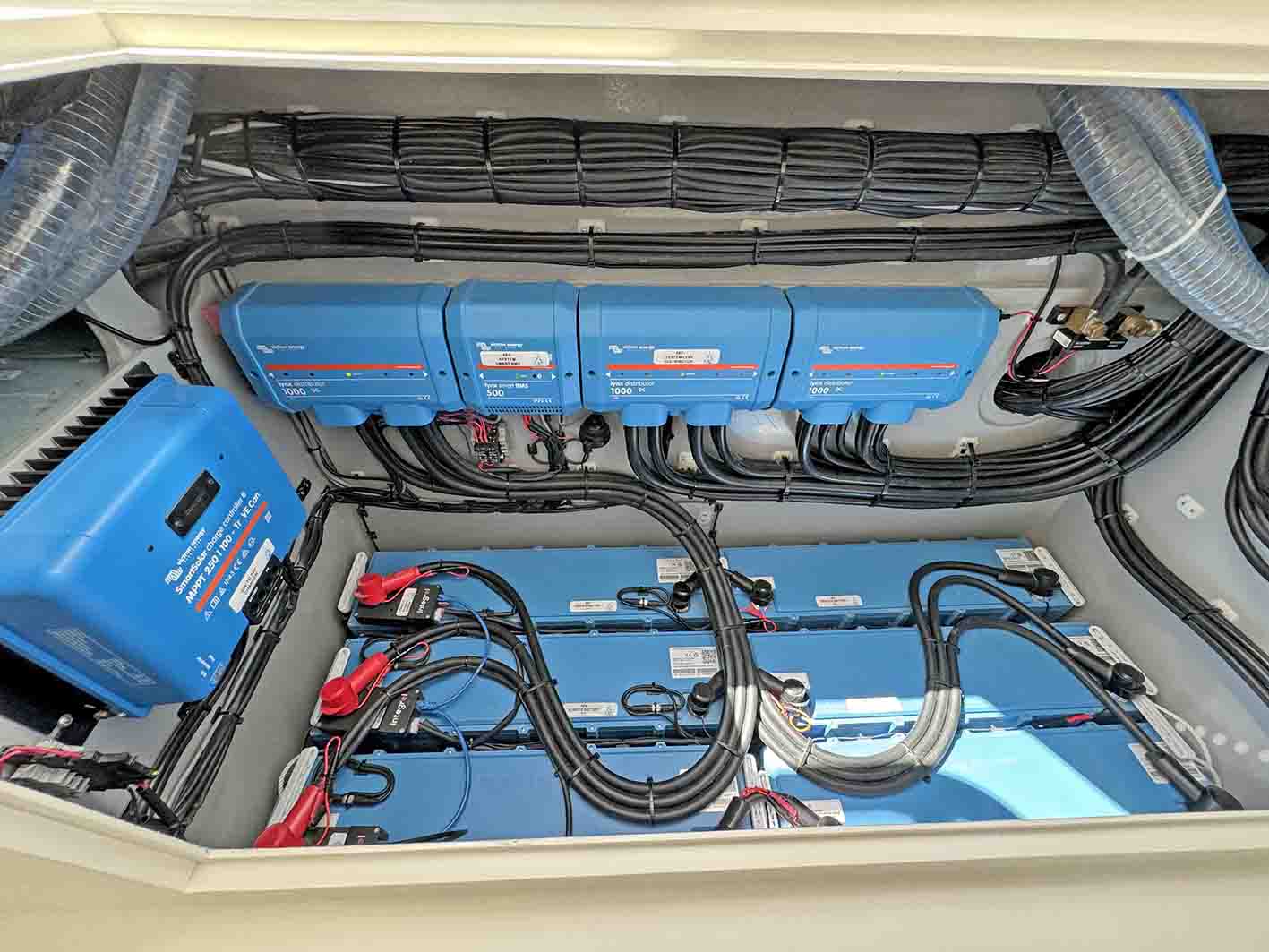
Lithium-ion battery banks. Lithium delivers full power right down to about 10% capacity, the same way your phone does. Lead acid drops off long before that. A 600-to-800 amp-hour lithium house bank carries far more usable energy than its lead-acid equivalent, in less space and at less weight.
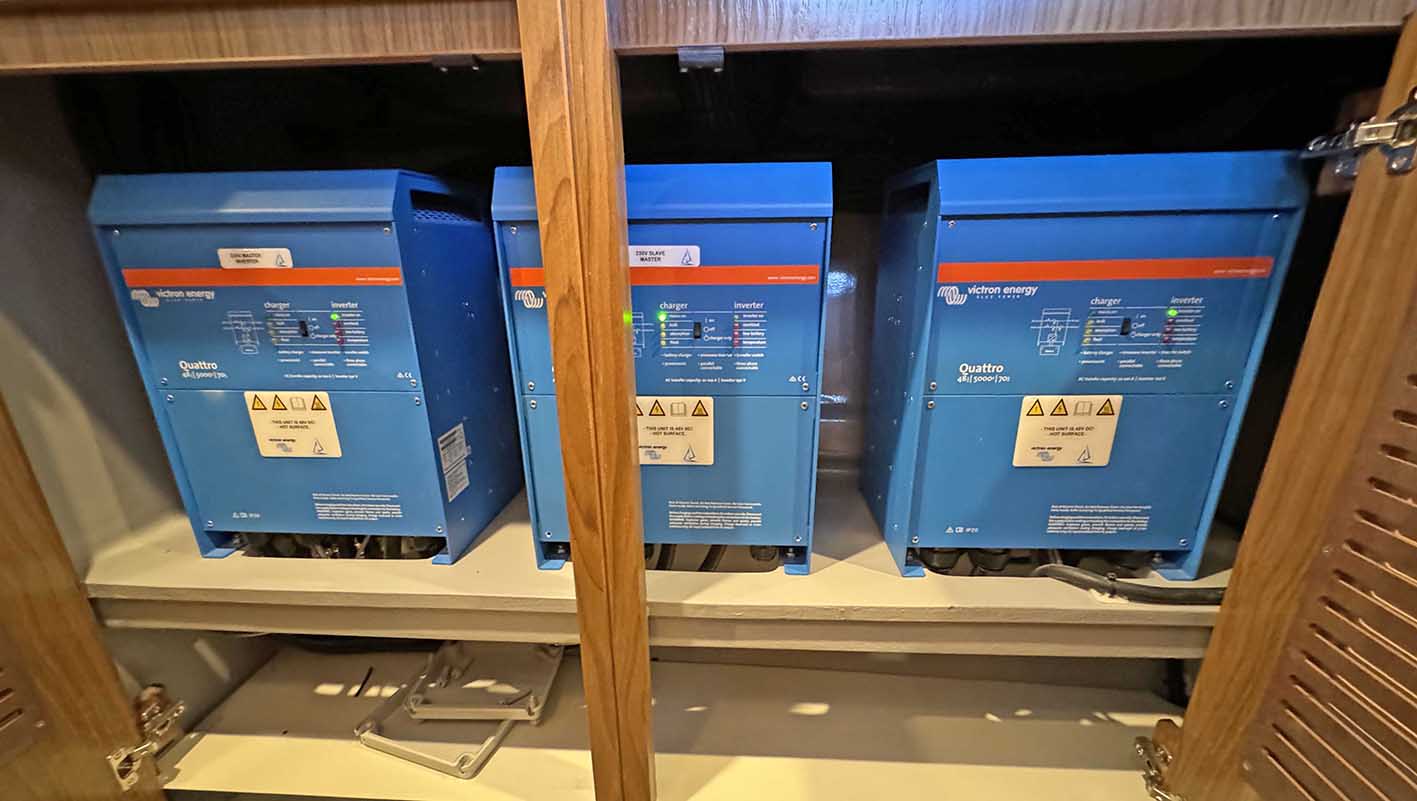
Inverter technology. Modern marine inverters at 5kW to 10kW can run multiple inverter-driven air conditioning units. You can’t necessarily start them all at the same instant — startup draw is high — but you stagger them: one on, settles to 15 amps; next one on, settles to 15 amps. Inverter-driven air cons themselves draw far less than the old single-speed compressors.
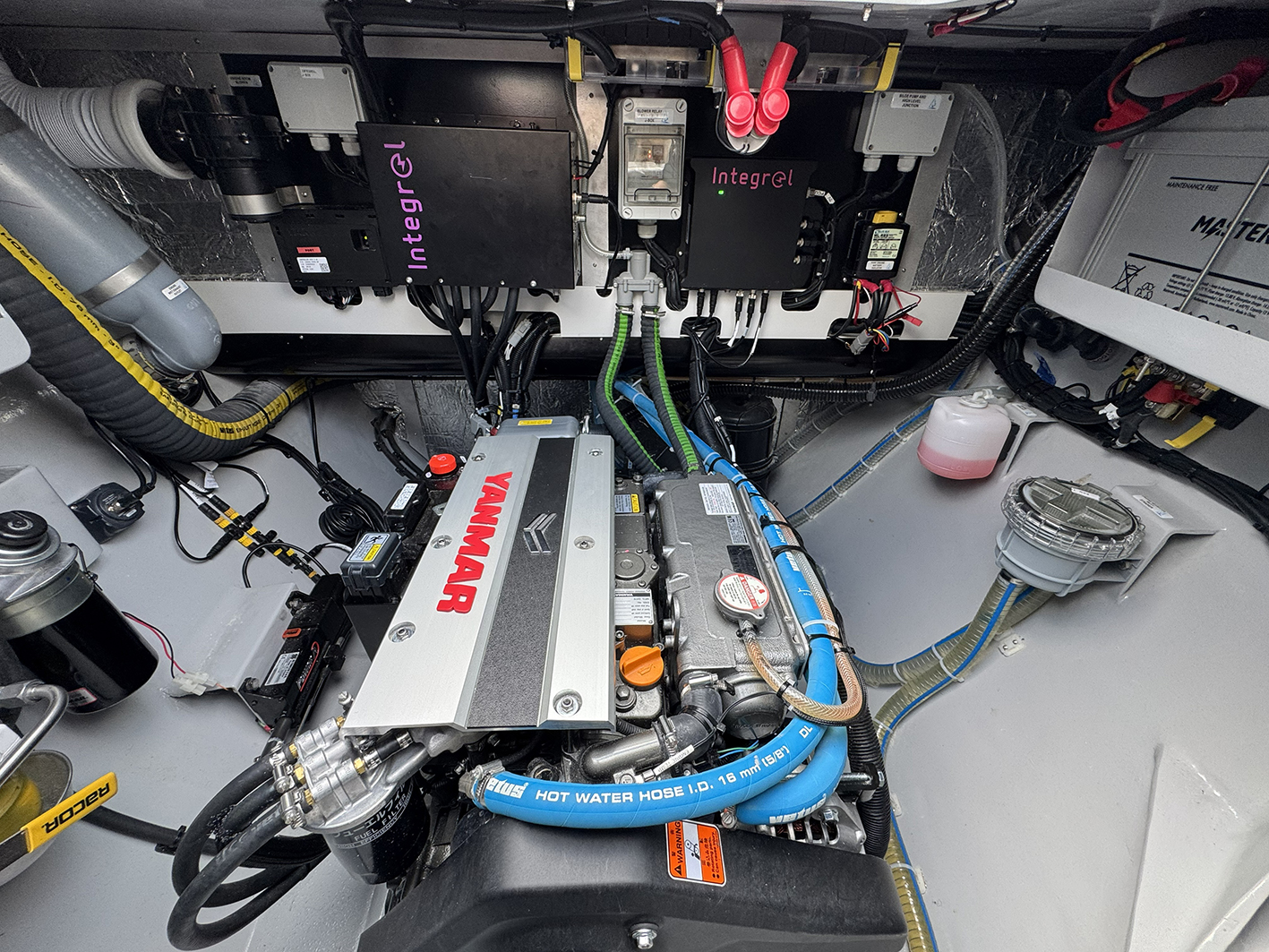
High-output alternators on the propulsion engines. The Balance 526 carries a 70-amp auxiliary alternator on each Yanmar, dedicated to the house bank. Need to top up the lithium? Run an engine for an hour. The bank absorbs the charge fast, because that’s what lithium does.
Add efficient solar — seven 327W glass panels on the hard top, each with its own MPPT regulator so a partial shadow on one panel doesn’t drag the whole bank down — and you have a boat that, in the right conditions, simply doesn’t need a generator to live aboard at anchor.
What That Looks Like in Practice: Living at Anchor Without a Boat Generator
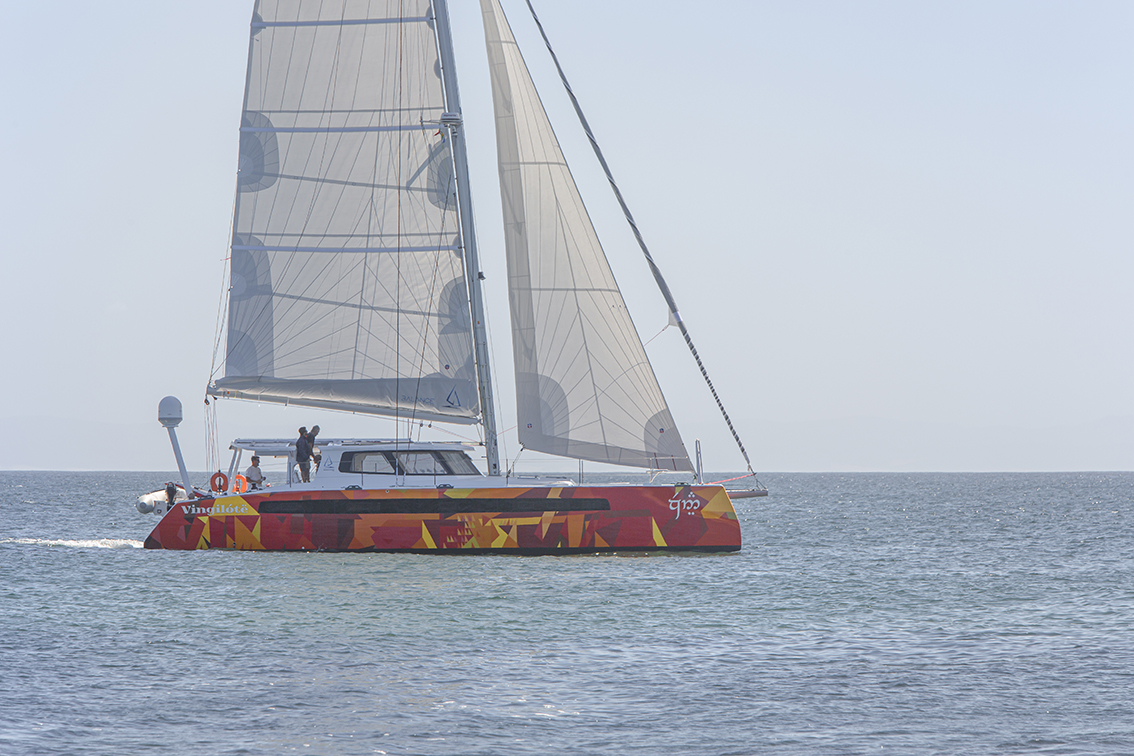
Hull number seven, currently on the dock at St Francis, has no generator. During commissioning we plugged her into shore power to verify everything worked. Then we unplugged her. Air cons running, fridges running, navigation electronics running, batteries holding up under her own solar and the occasional engine top-up.
That’s the proof point. The question stops being “what size generator?” and becomes “have we sized the lithium, inverter, alternator, and solar correctly to live without one?”
When a Marine Diesel Generator Makes Sense
Honest answer: not everyone should skip it.
You probably still want a generator if you’re not going lithium. If you’re staying with AGM or gel batteries, the old math applies: you’ll need a generator to run heavy AC loads through the night.
You probably want one if you spend most of your time at a dock without reliable shore power, or if you’re running an unusual combination of high-draw appliances — washer/dryer, large watermaker on demand, hot water from electric elements rather than the engine heat exchanger.
You probably want one if you’re cruising in latitudes or seasons where solar is unreliable for long stretches. The Pacific Northwest in winter is a different proposition from the Bahamas in spring.
And some owners simply prefer absolute redundancy — a backup energy source they can run whenever they want. That’s a legitimate choice, and we’ll happily build to it.
For most of our buyers today, though, a thoughtfully-specced lithium and solar setup makes the generator question moot.
Shore Power, 110 or 220: Managing Global Catamaran Electrical Systems
One more piece of this puzzle. Owners often agonize over whether to build a 110V or 220V boat. We give buyers the choice — but we install a multi-voltage charger either way. So a 110V boat plugged into 220V shore power still charges its lithium bank, and vice versa. The shore power cord stops being about running the boat’s appliances and becomes about keeping the batteries topped up. Everything aboard runs off the lithium or through the inverter.
It’s a small architectural decision with a big practical payoff: you can plug in anywhere in the world.
The Balance Approach: Coherent Energy Architecture for Cruising Catamarans
We don’t sell generators, or batteries, or solar panels in isolation. The way an electrical system works on a long-distance catamaran is about how the components talk to each other. Battery chemistry, inverter capacity, alternator output, solar configuration, AC load profile — these are not independent choices. Get one wrong and the whole system underperforms.
What we’ve tried to do is build catamarans where the energy architecture is coherent from the start. That means fewer black boxes, fewer “I thought it would work like this” moments six months in, and an owner who actually understands their boat.
For most of our buyers, that means a thoughtfully-specced lithium and solar setup with no generator. For some, it still means a small, modern generator as a fourth leg of the table.
The right answer is the one that matches how you’ll actually use the boat. If you’d like to talk through your own use case, get in touch — we’d rather you came out the other side with the right boat than with the boat we wanted to sell you.
Stay in balance.